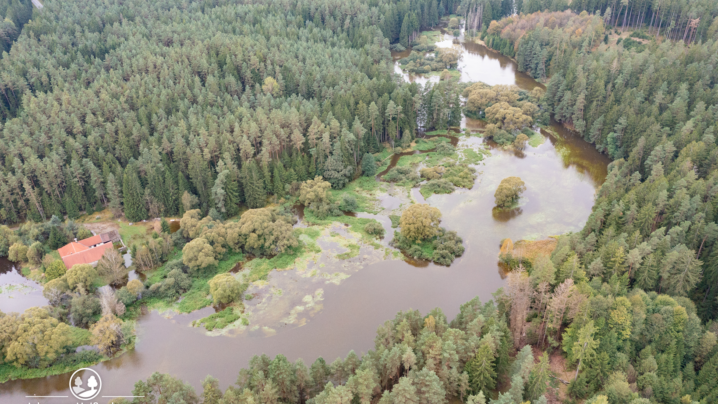
Small retention basins prevent flooding from slope runoff
To reduce the impacts of stormwater flooding on steep hillsides, municipalities in the "Bucklige Welt – Wechselland" Region construct nature-based retention basins. These measures improve local road drainage and offer more reliable protection during heavy rainfall events.
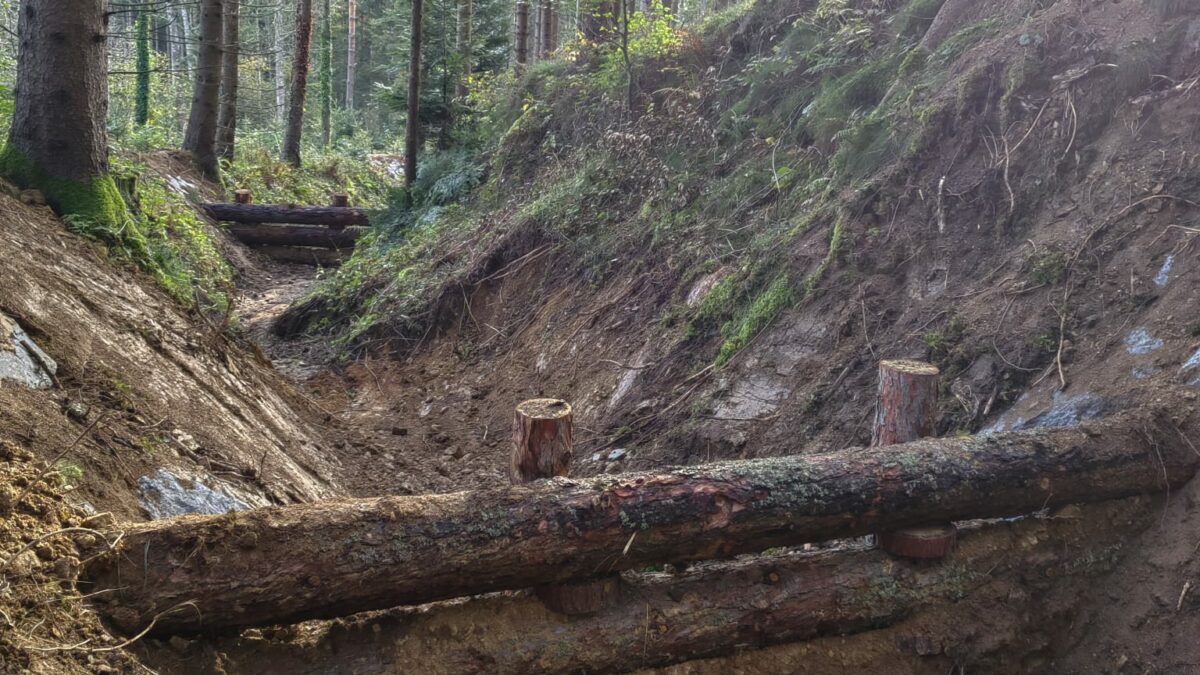
- Summary: Safety measures against the consequences of stormwater floods on steep hillsides. Nature-based retention basins were constructed in 5 communities to improve local road drainage. Additionally, 4 further basins were built in 2024 and more are planned for the next years.
- Duration: Construction is relatively quick, as contractors only require about 14 days to install a single basin. Equally important are the discussions with the municipalities and landowners, on-site visits with stakeholders, as well as a clear understanding of dos and don’ts for the project.
- Funding: KLAR! Invest
- Further stakeholders: local contractors for construction, landowners, and the municipalities
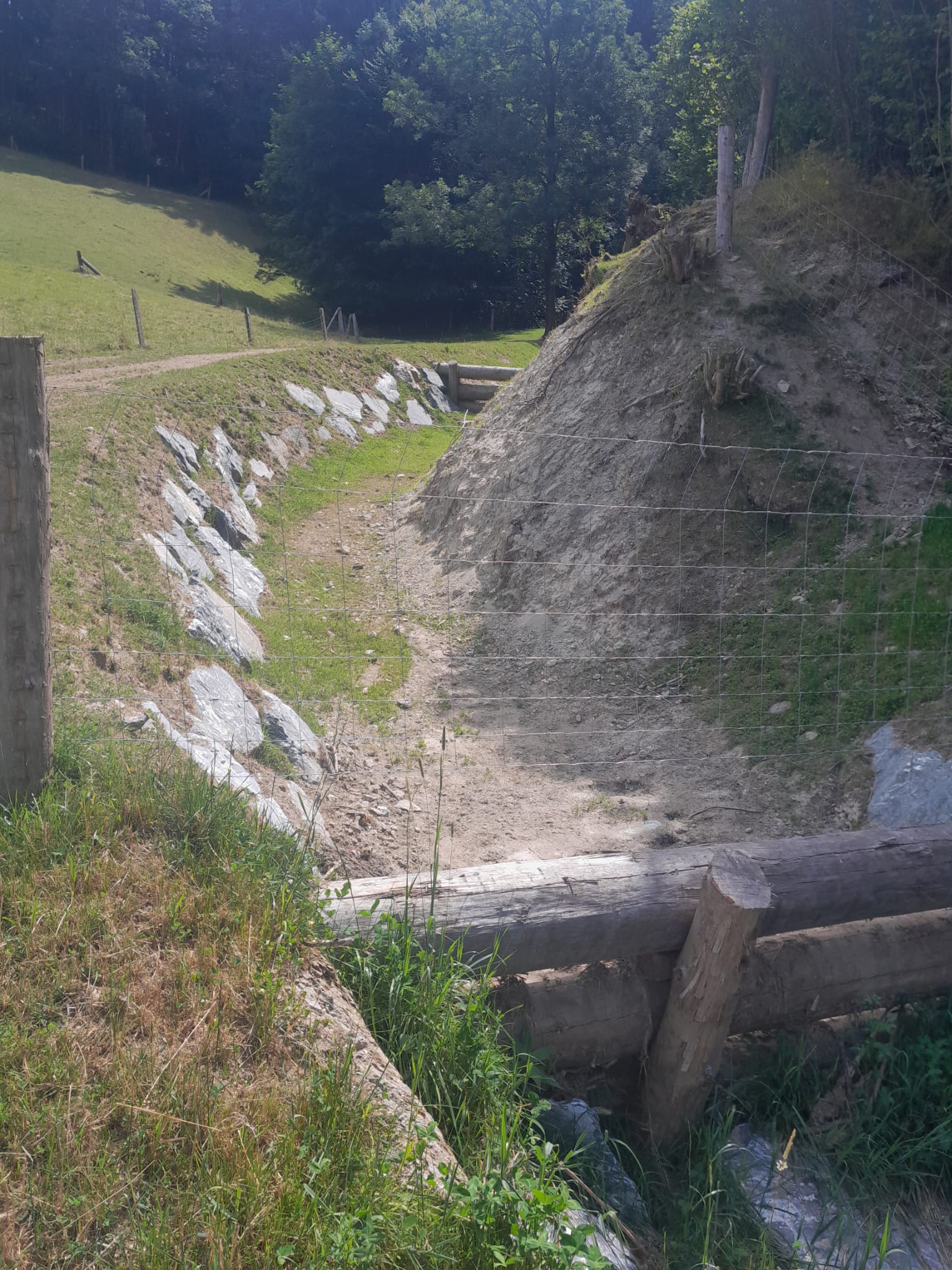
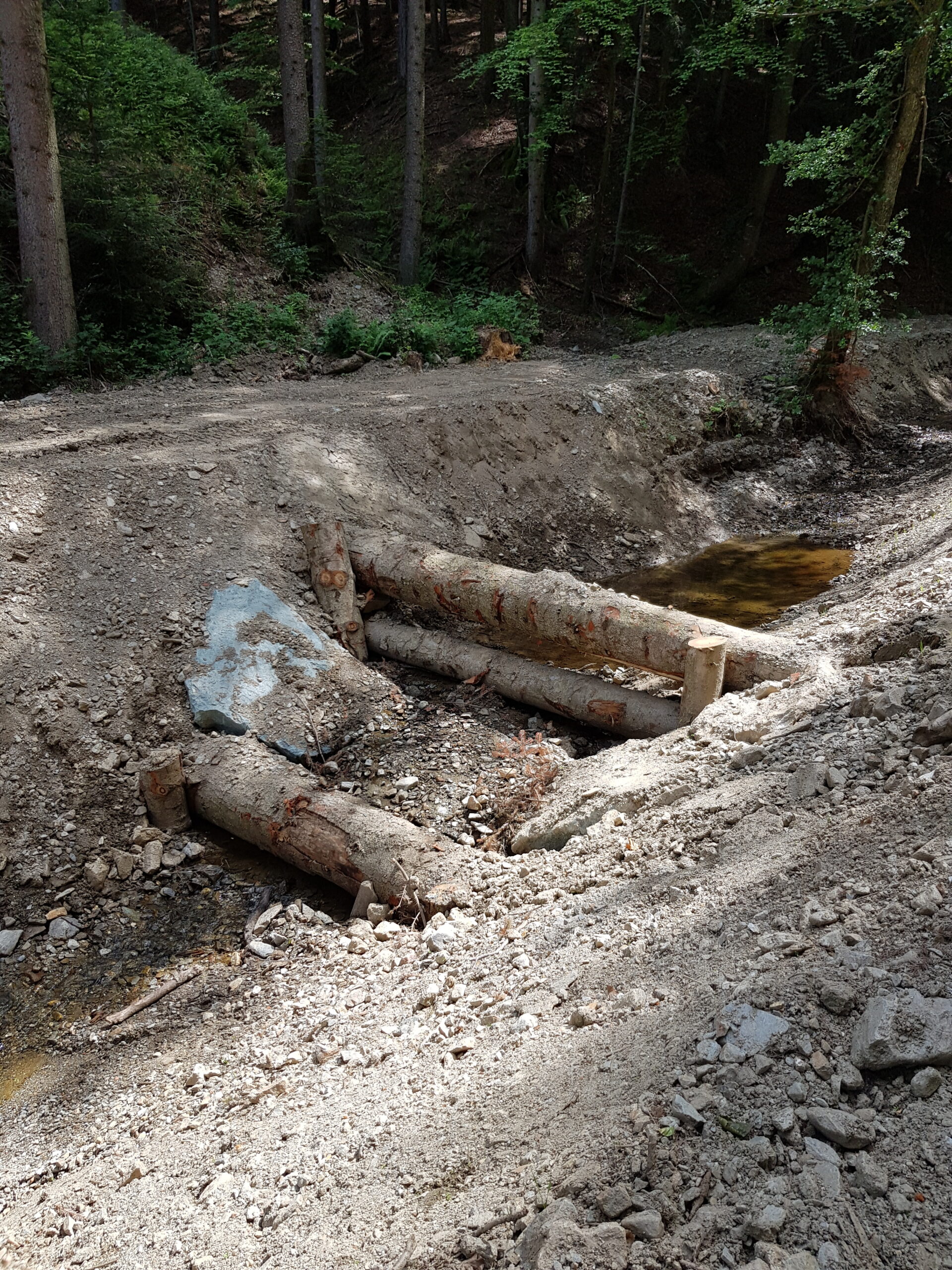
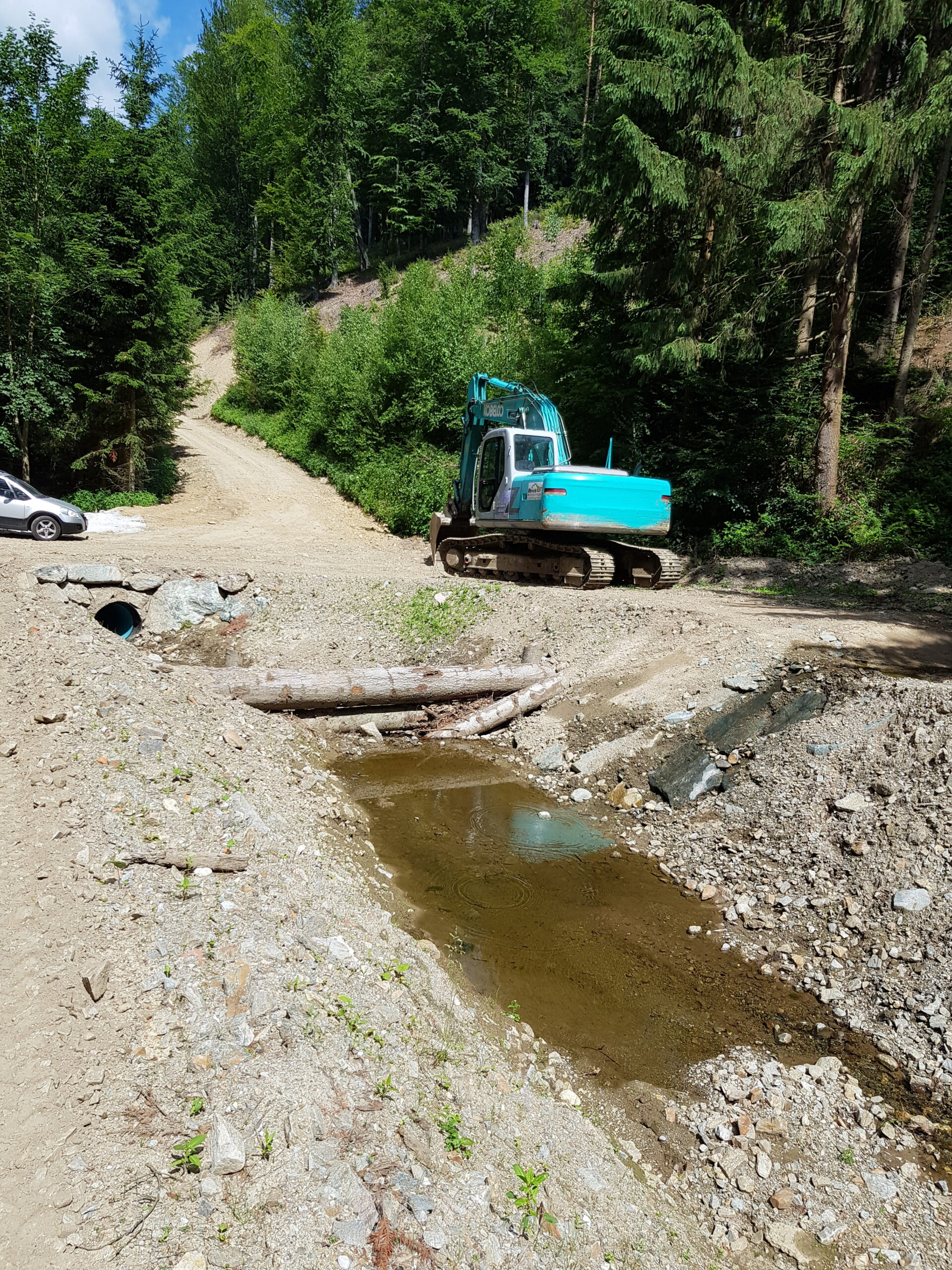
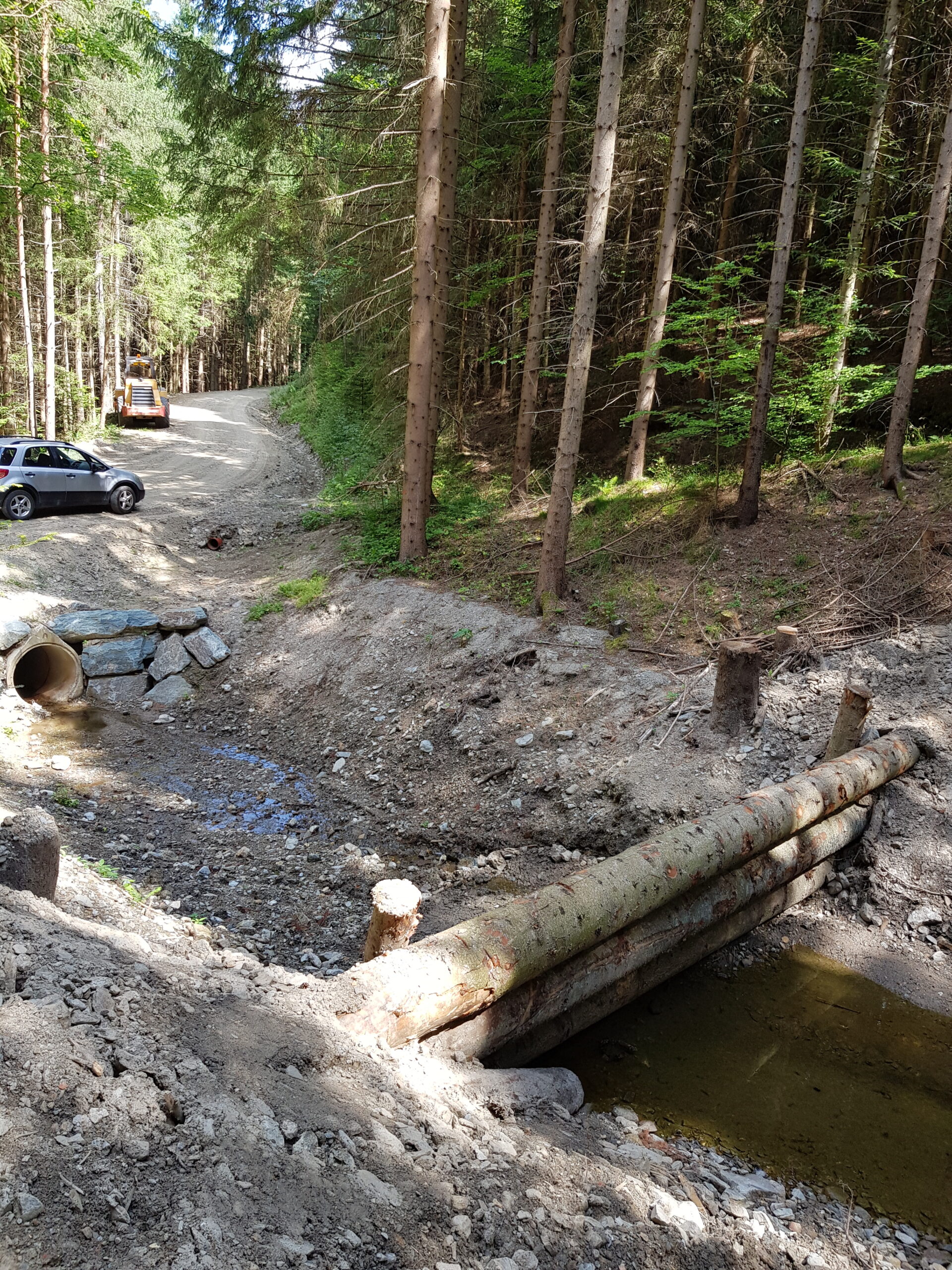
Because of the local topography (ditches, slopes, and narrow valleys), the area is susceptible to mudslides, log jams, and floods. Over the last three years, small retention basins have been built in 5 municipalities in the region Bucklige Welt-Wechselland. Basins were built above the affected areas, to catch debris during heavy rain events and drain precipitation more slowly.
The increased water retention capacity and reduction of erosion from floodwater have had a positive effect on forestry, as they help maintain the infrastructure while protecting and fostering both biodiversity and recreational forests.
Small basins with a big impact
The municipalities of Krumbach, Lichtenegg, Hochneukirchen-Gschaidt, Aspang-Markt and Kirchschlag in the Bucklige Welt region have implemented these basins to prevent mudslides and flooding from reaching vital infrastructure, as well as residential and industrial areas. They also help maintain forestry trails, paths and slopes, reduce damage to the recreational forest, and protect and support local biodiversity
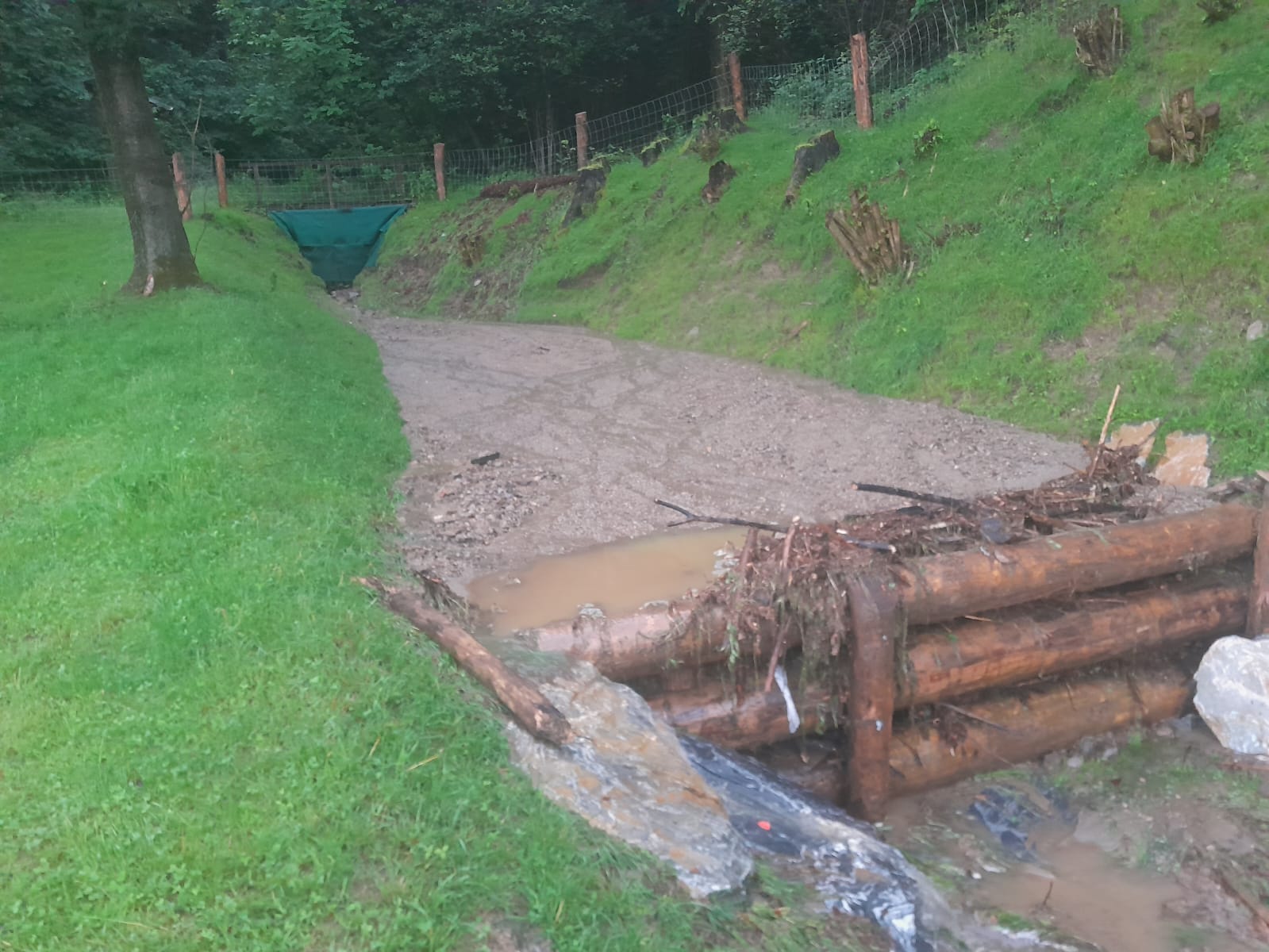
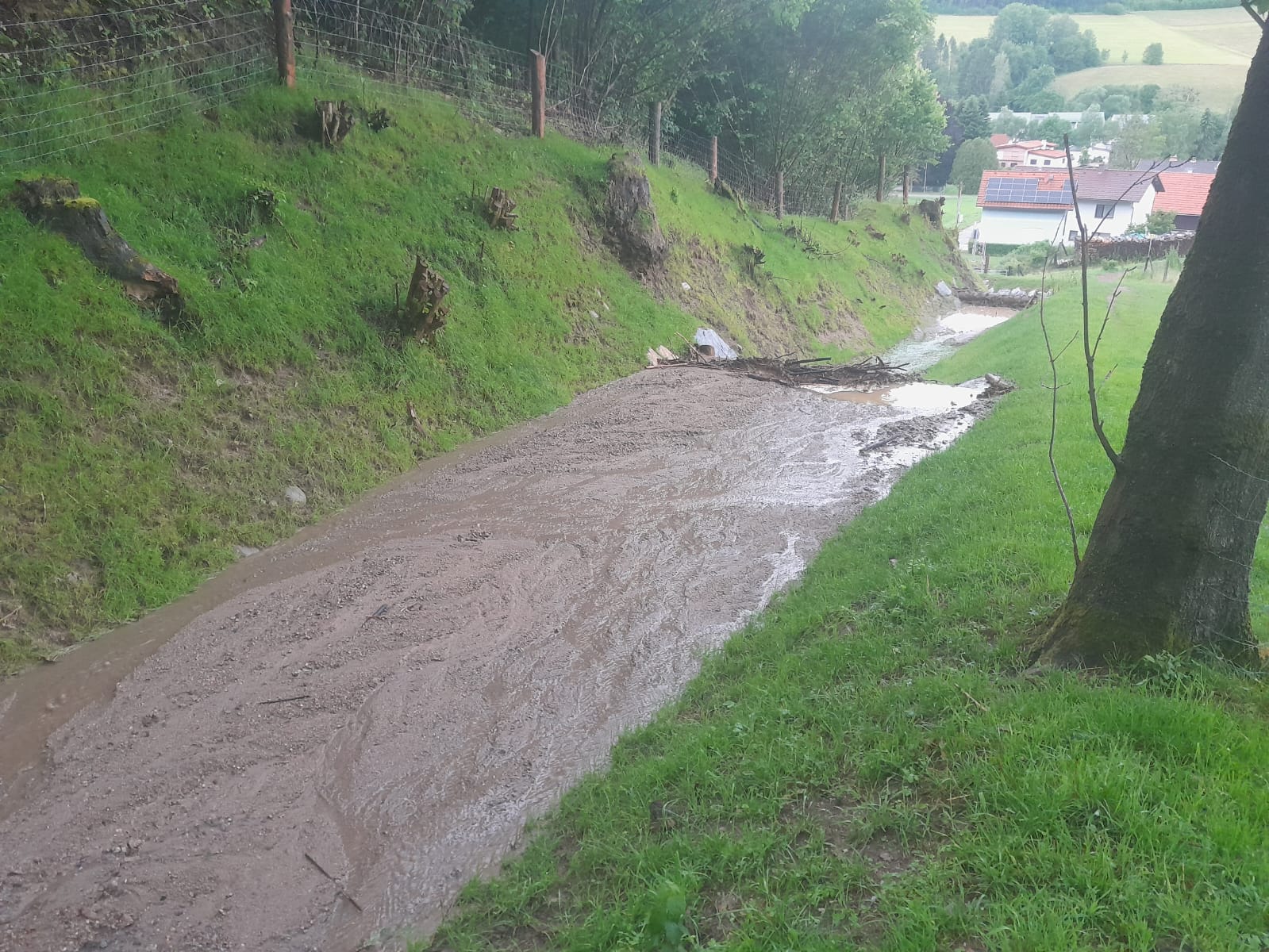
The small retention basins have proven their worth
The municipalities have had a positive experience with their new basins. Critical zones at roads and train lines, usually vulnerable to heavy rainfall and debris remained unaffected.
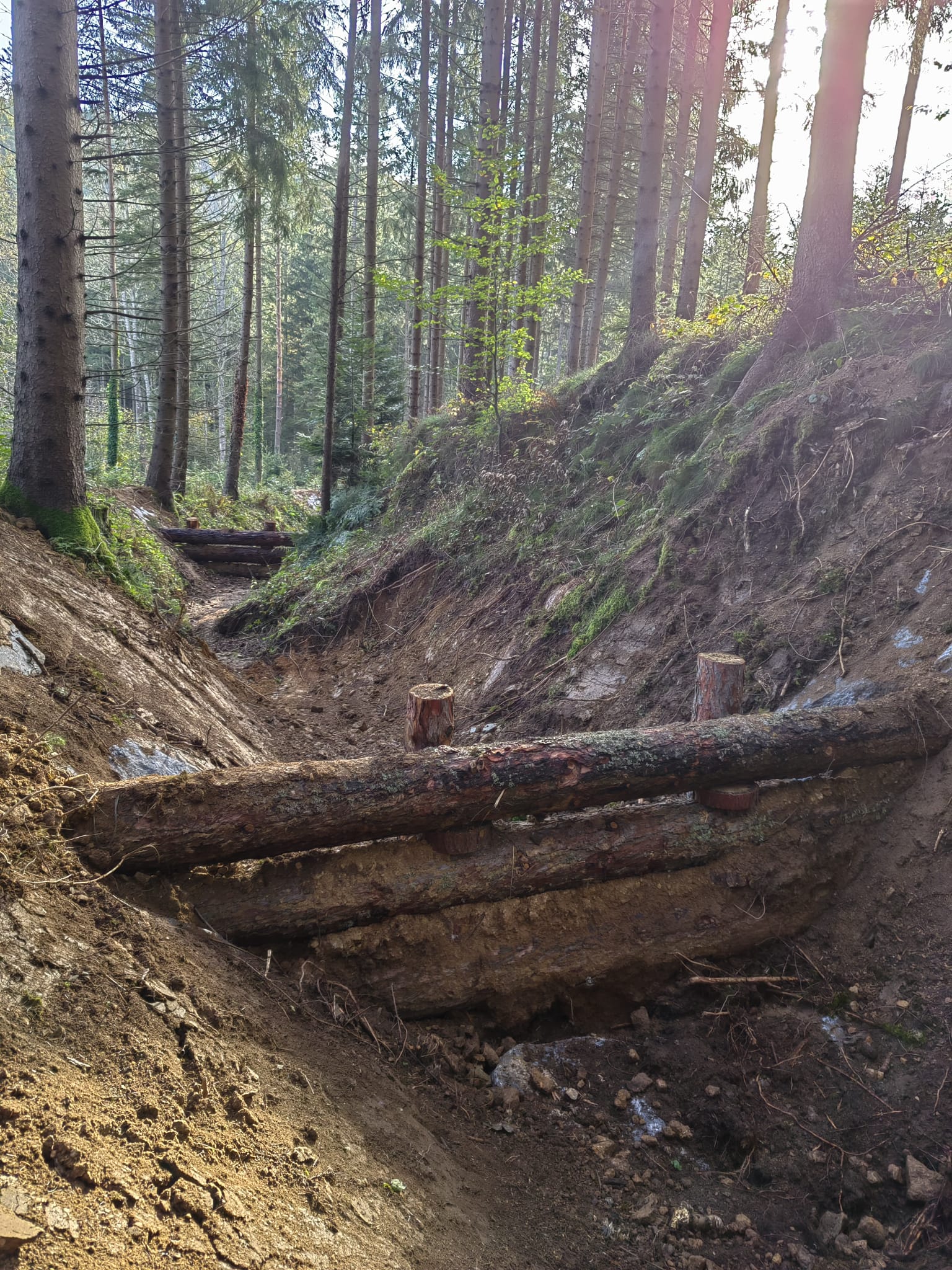
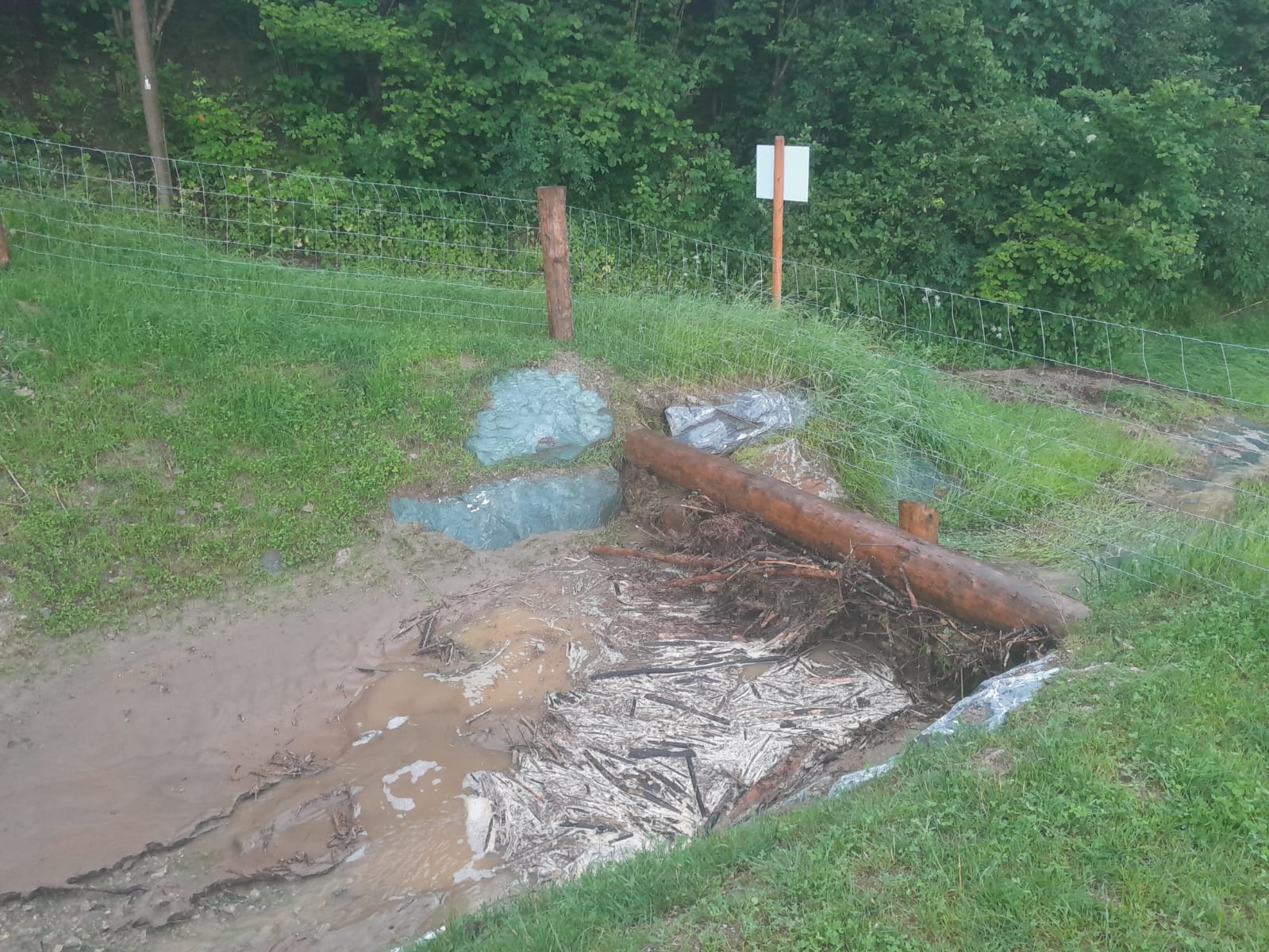
Instead of constructing large retention basins, which would significantly impact the environment, multiple smaller, nature-based basins constructed out of wooden piles and natural stones were implemented. Simply by removing the accumulated debris with an excavator after a storm, the basins are ready-to-go for the next heavy rainfall.
The storms on the 8th of June 2024, which hit parts of the region Bucklige Welt, demonstrated the effectiveness of the basins. Over 200 m3 of debris was collected and removed from the basin at Hochneukirchen-Gschaidt alone. In this manner, the surrounding buildings were effectively and efficiently protected from flooding and mudslides.