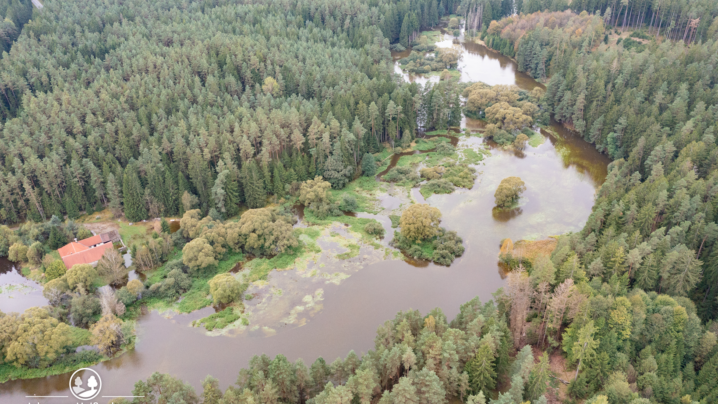
Flood control for St. Valentin
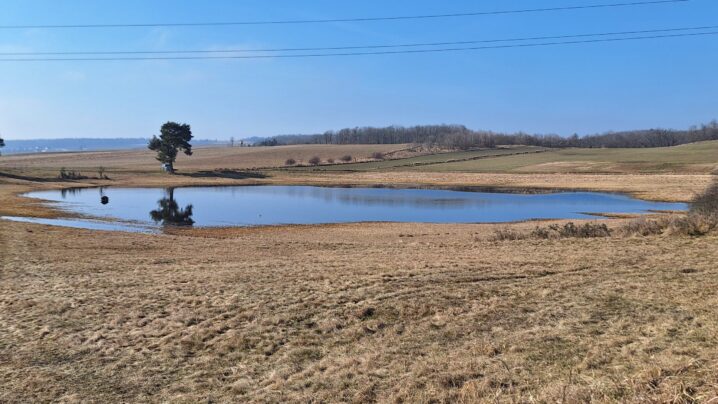
Through a successful adaption measure the Erlabach (or "Erla creek"), previously a straightened “rivulet”, has been transformed into a vital retention basin, rich in biodiversity.
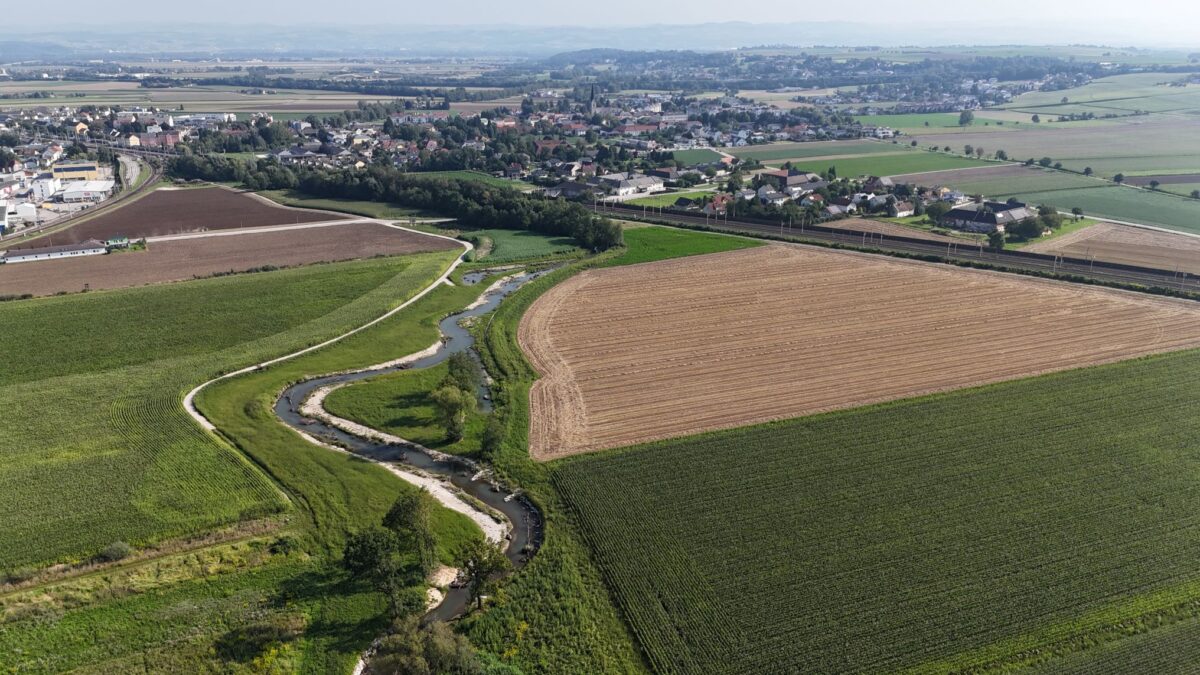
- Kurzfassung: Der Erlabach bei St. Valentin wurde auf einer Länge von rund 850 Metern ökologisch aufgewertet um den Schutz vor Überschwemmungen zu erhöhen. Dafür wurden 2,4 ha Grund erworben.
- Summary: A total of 850 meters of the Erlabach (oder Erla creek) near St. Valetin was ecologically restored to improve its water retention capabilities. To achieve this, 2.4 ha of land was acquired
- Start: Beginning of November 2024
- Completion: Early 2025
- This project was funded via the Environmental Support Act (UFG): The total cost of the restoration was 1,700,000 Euro, of which 60 % was paid by the federal government (1,020,000 Euro), 30% by the Lower Austria landscape conservation fund (510.000 Euro), 8 % by the biodiversity fund (136.000 Euro), and finally 2 % by the municipality of St. Valentin.
- Contributing Parties: Project management by the Department of Hydraulic Engineering at the Office of the Lower Austrian Provincial Government, engineering firms IBL Ziviltechniker GmbH and Blattfisch e.U. (planning and supervision of the project), and Hinterholzer GmbH (construction work).
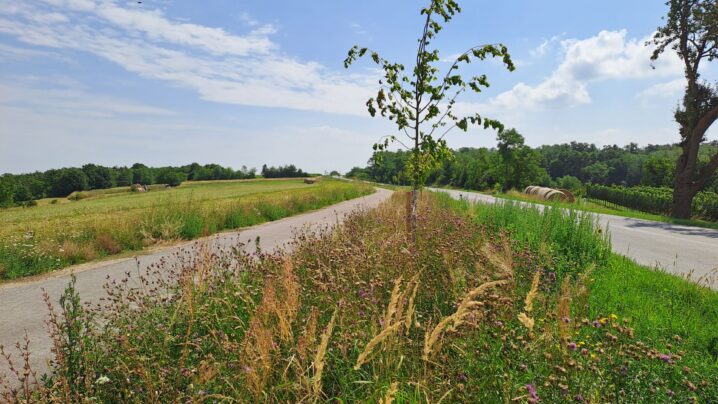
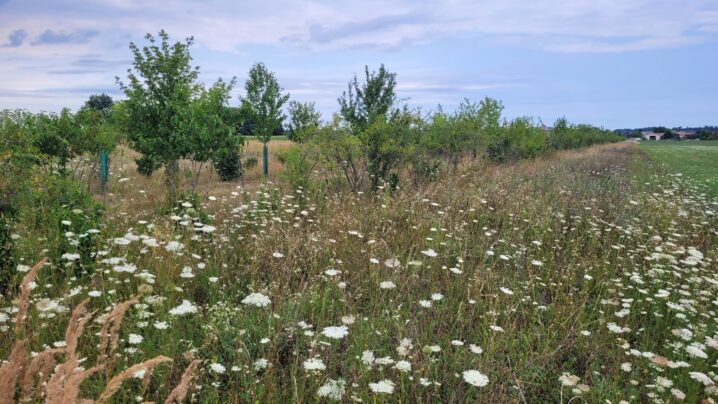
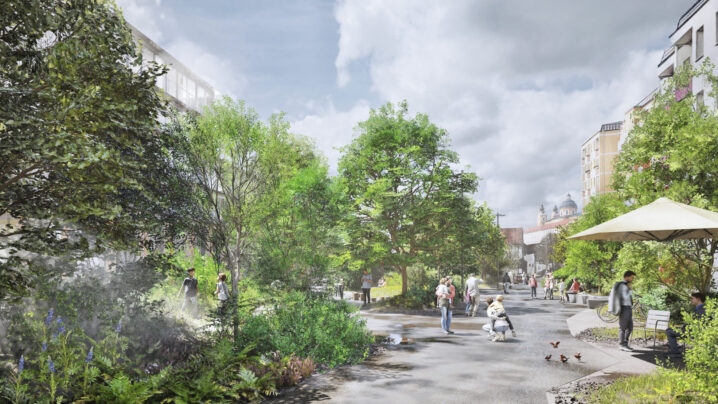
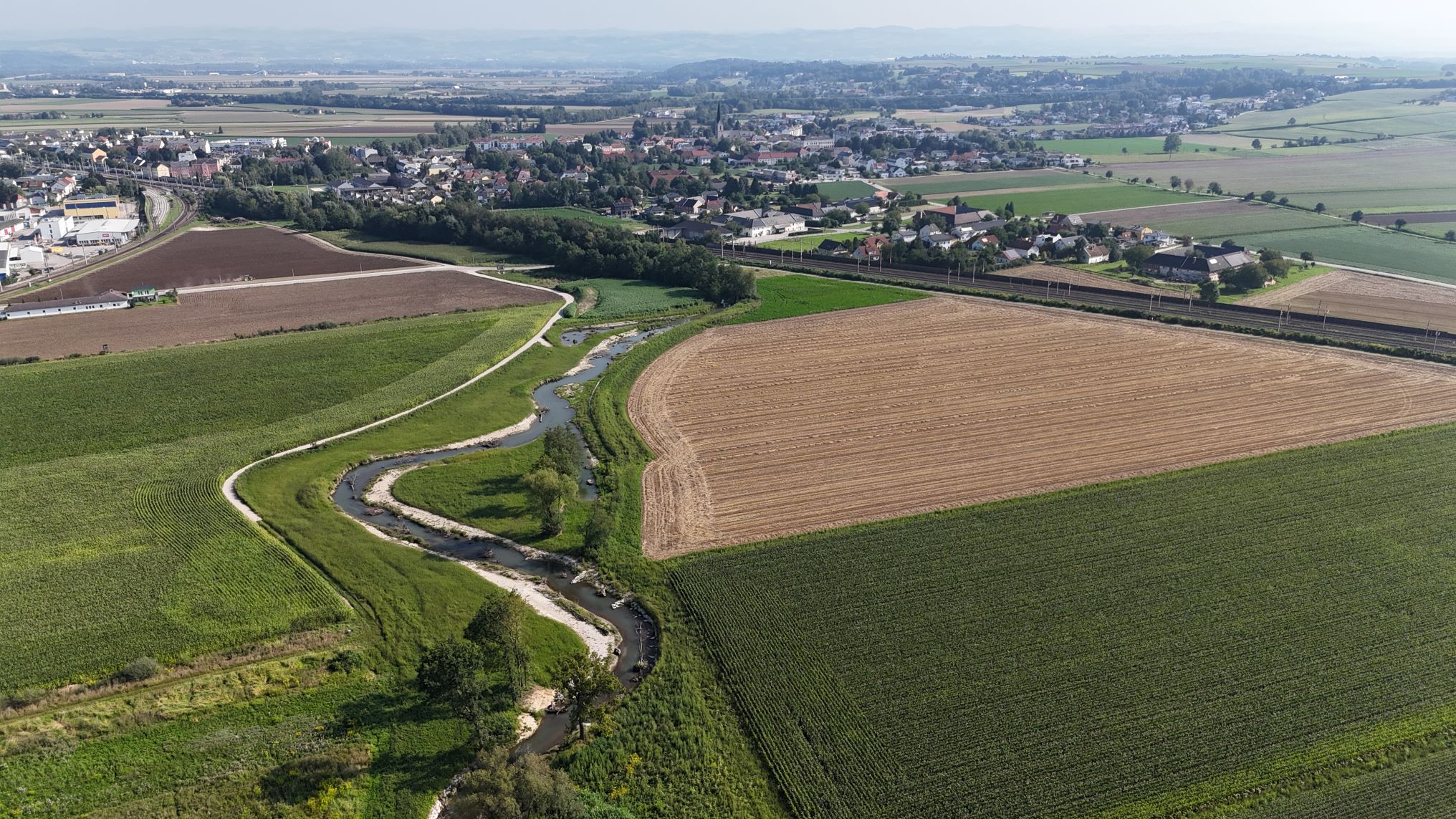
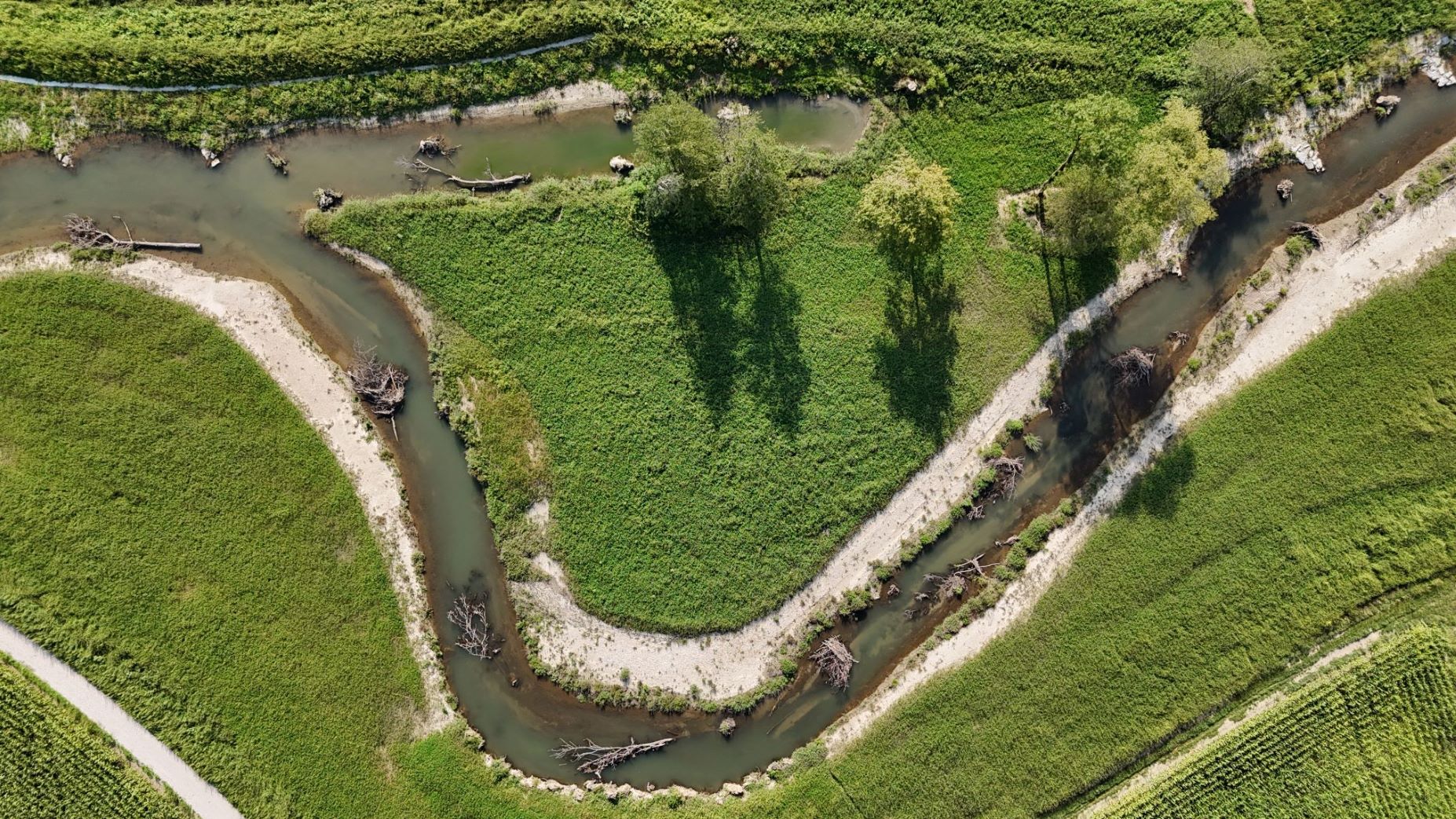
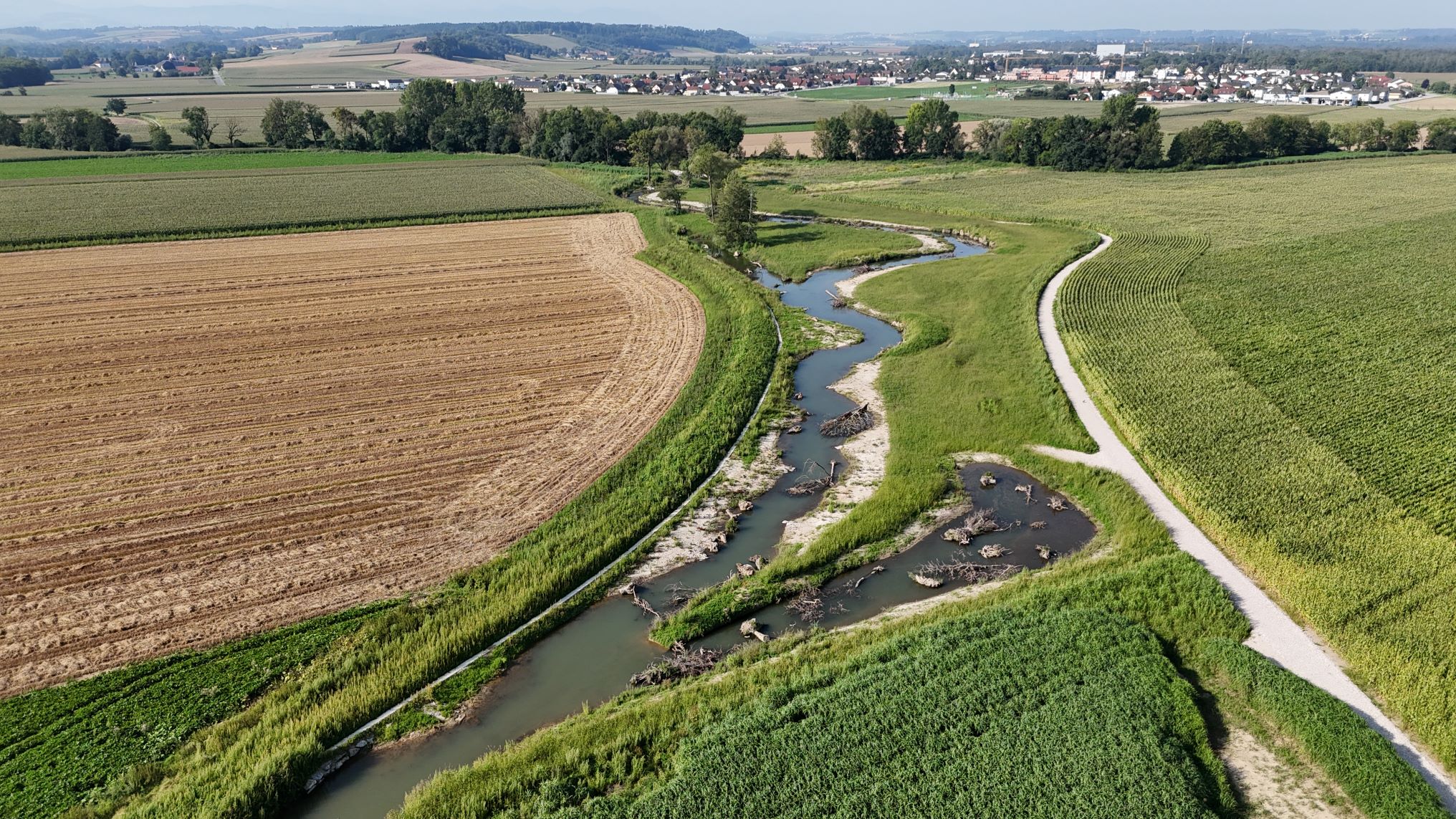
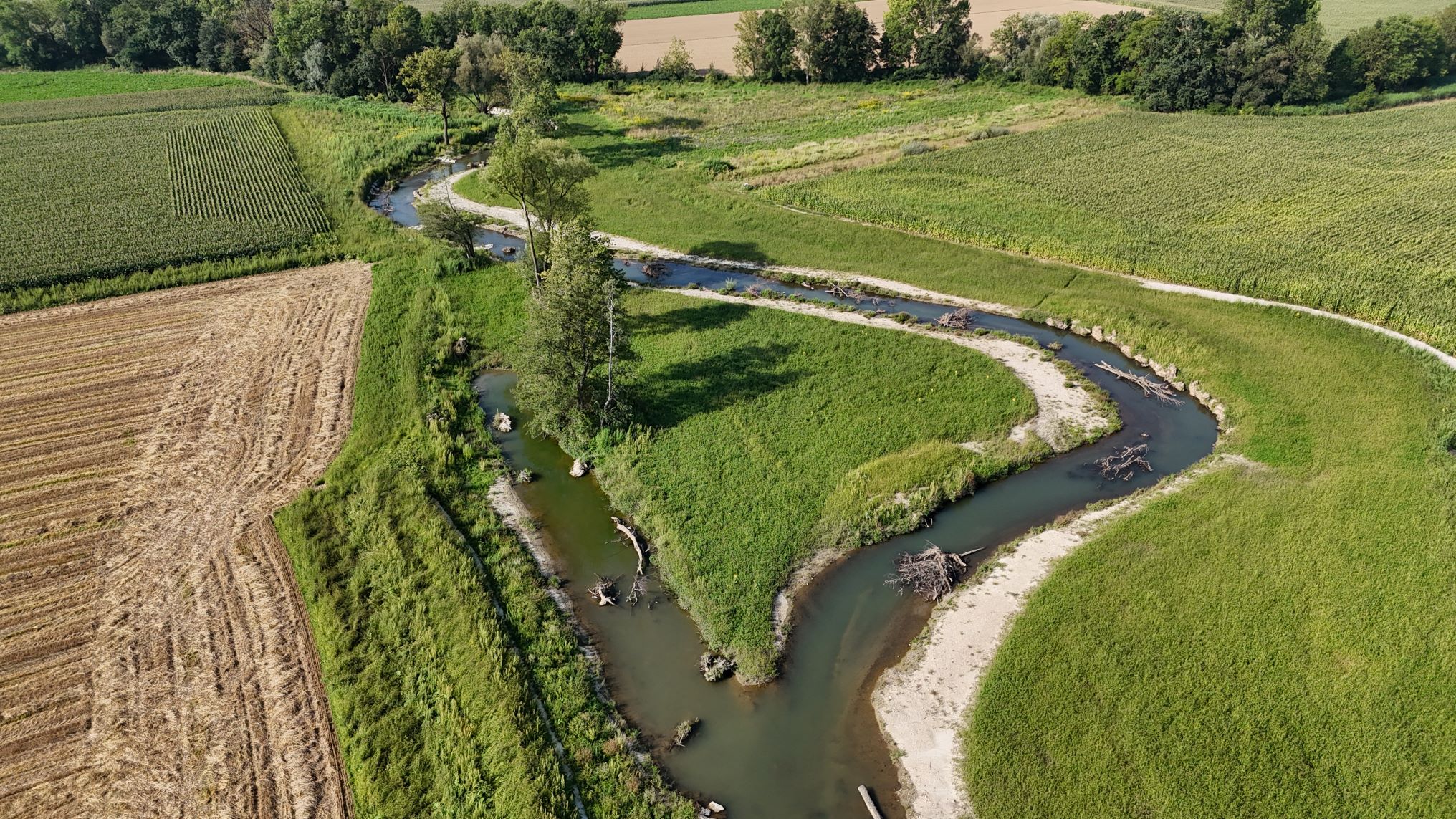
The previously straight, canal-like creek bed was revitalized over a length of 850 meters, creating benefits for people, nature, and the local infrastructure. Most of the costs were covered by federal and state governments. This includes planning and implementation costs, as well as the purchase of 2.4 hectares of land. Now 140,000 m2 of land has been transformed into a natural area, featuring a natural stream course, riparian forest, dry habitats, and wildflower meadows.
A dynamic, new flow to enhance biodiversity
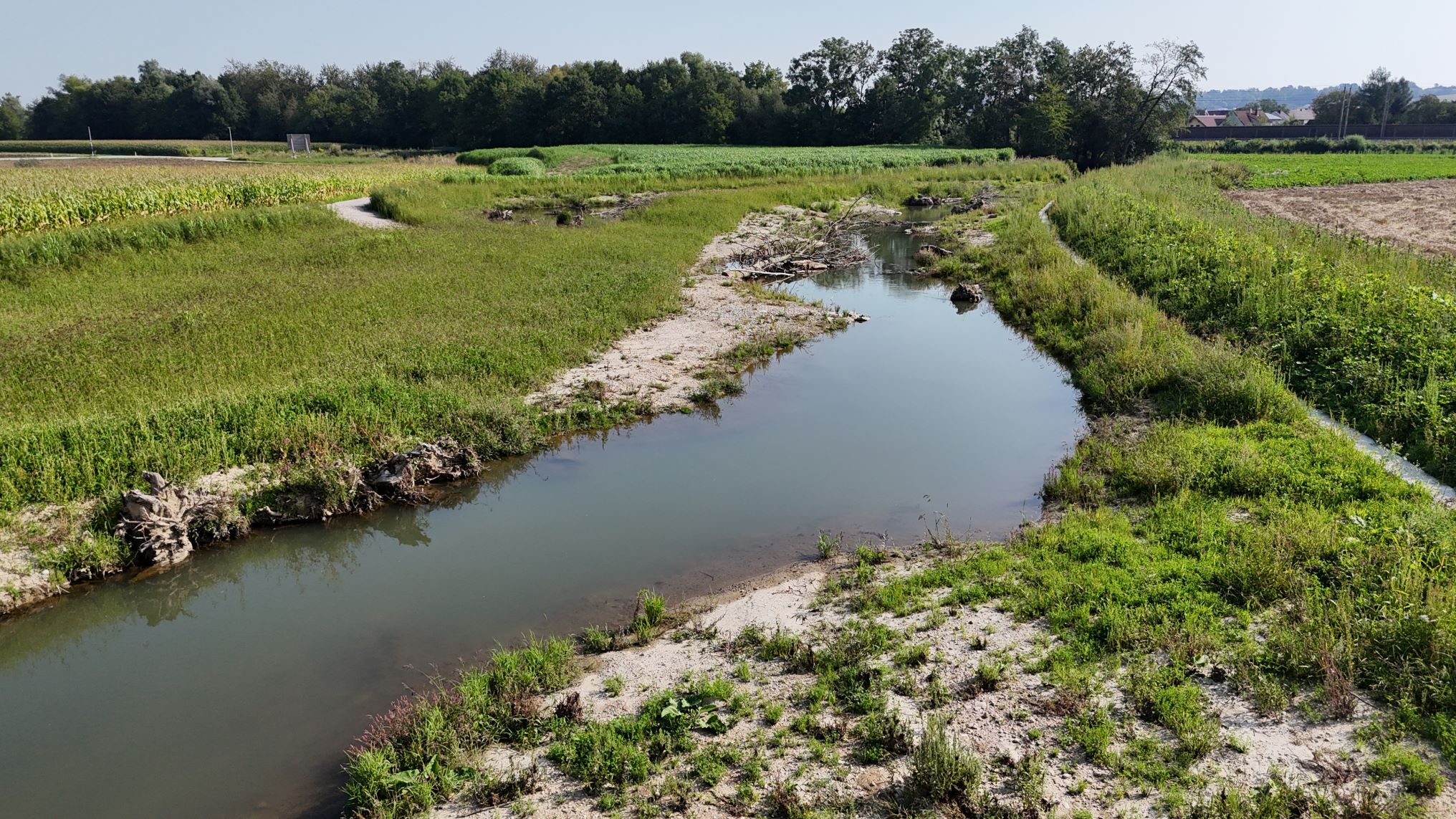
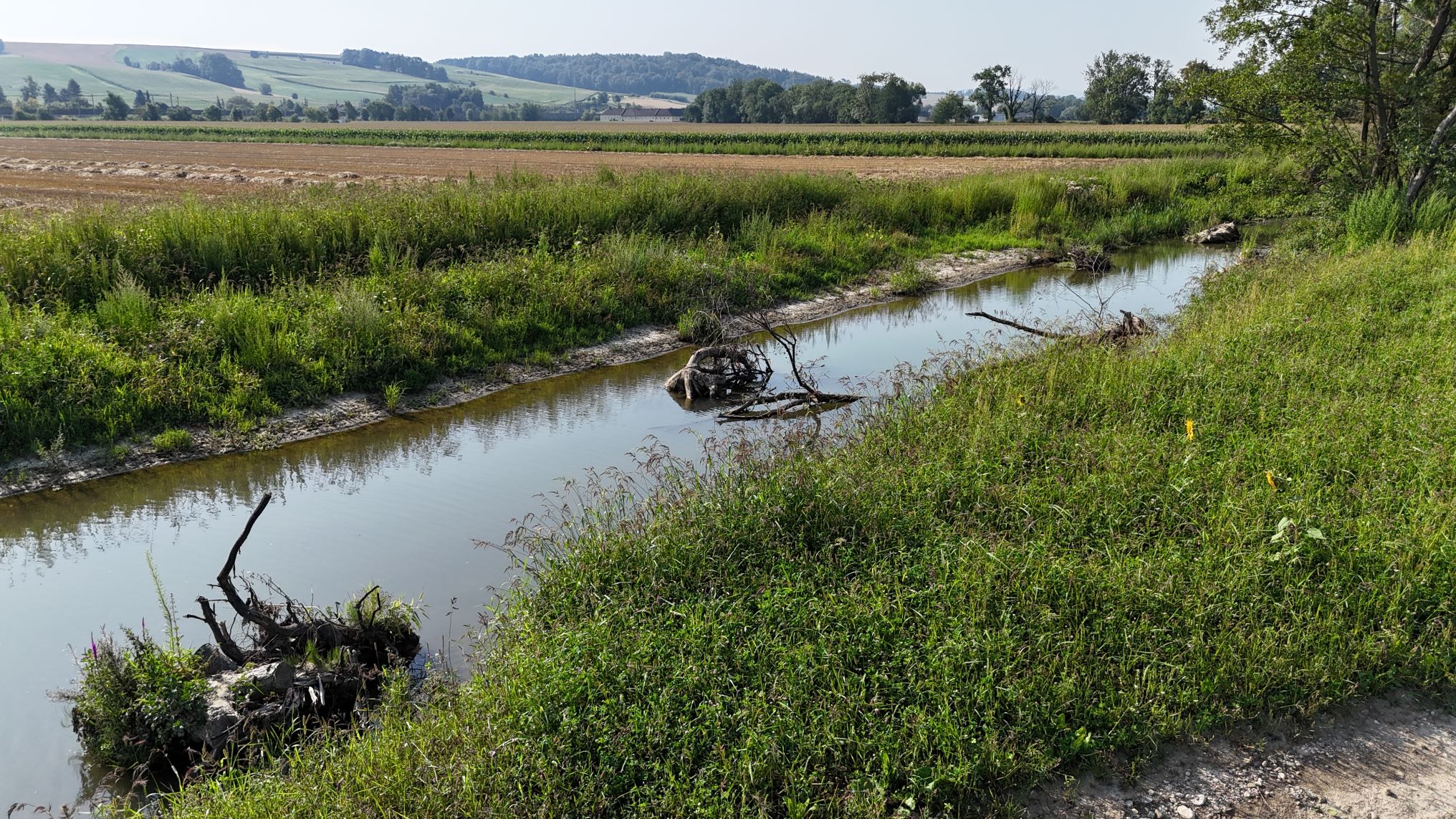
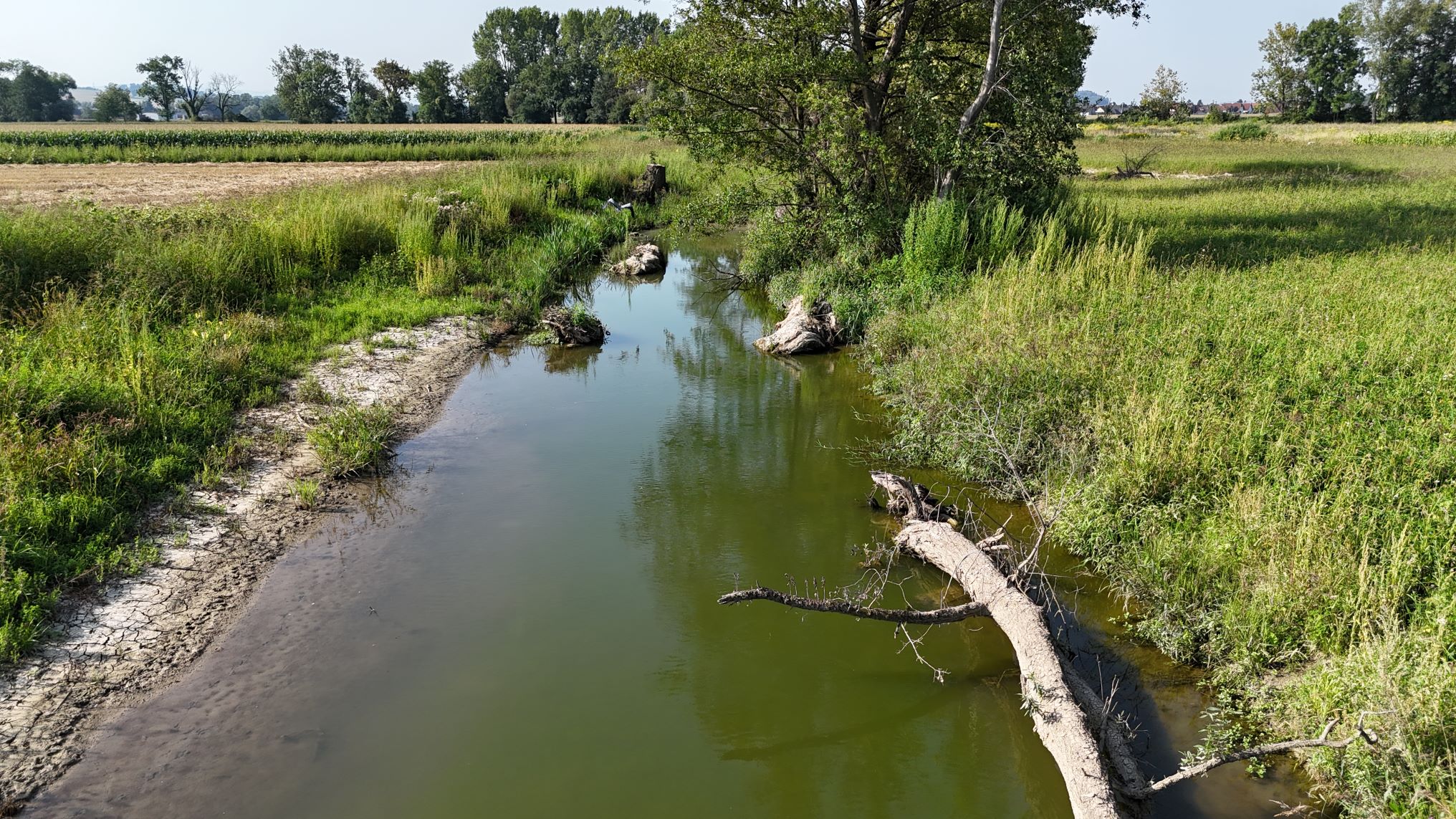
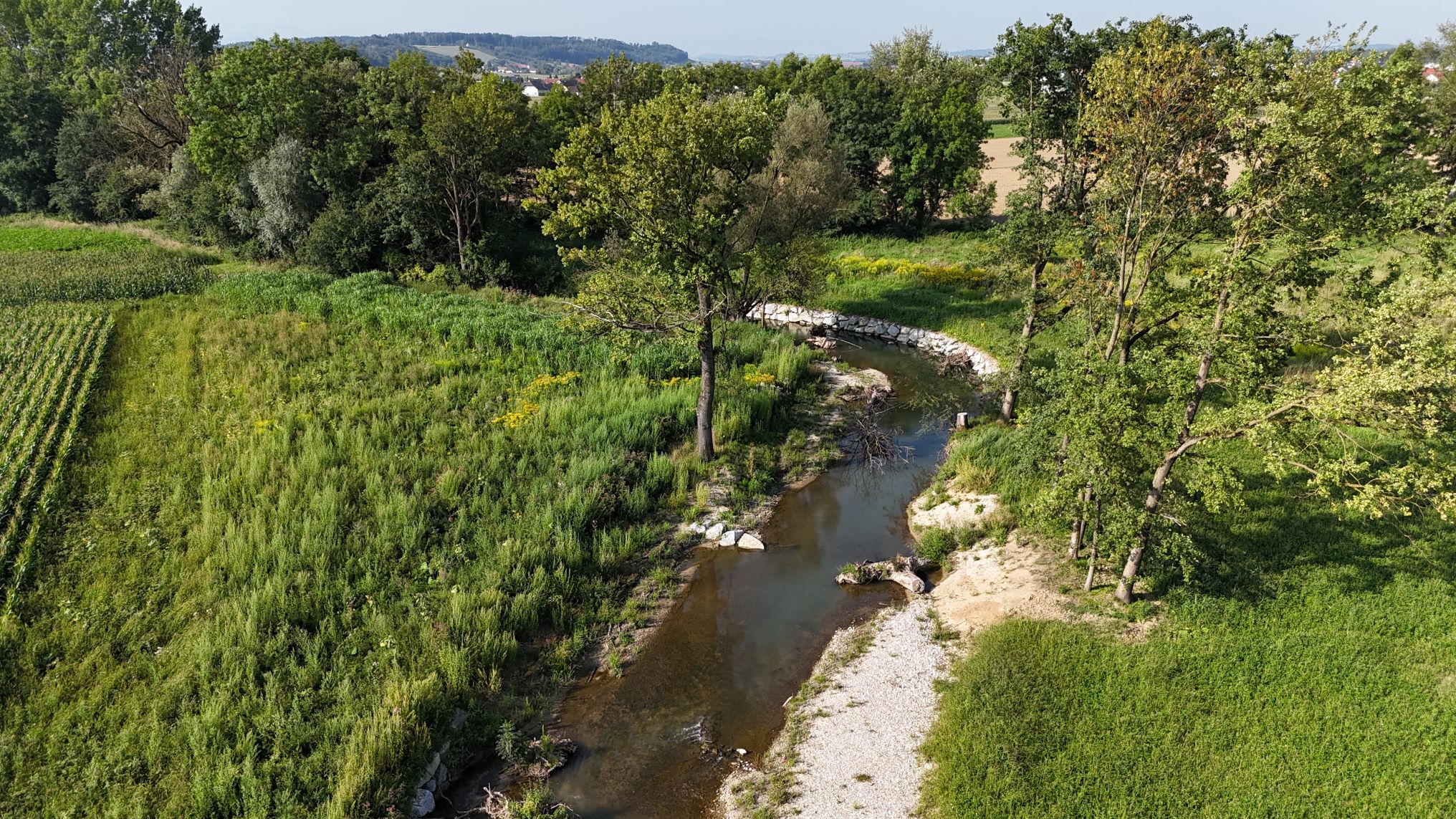
During the implementation process, the creek bed was widened and diverted into a newly laid side-canal. Now the stream profile follows a natural and sinuous flow. Through varying depths and structural elements such as dead wood, rocks & stones, and uprooted stumps, a more natural water flow is created. Such elements also provide important, natural habitats for various species of fish, amphibians, and insects. Following principles of a circular economy, the tree material was sourced from trees that had to be removed from the stream. This included diseased ash trees, which had to be felled regardless, for ecological reasons.
Natural flood protection through water retention in the terrain
The adjacent terrain was intentionally lowered, to facilitate stormwater retention. The effectiveness of this measure was demonstrated during a flooding event in March 2025. Then, the water was able to spread out in a controlled manner within the new terrain, before reaching the residential neighborhoods. In this manner, the renaturation of the stream has provided relief for the town’s stormwater drainage system and improved their resilience to extreme weather.
Stream bank greening and habitat restoration
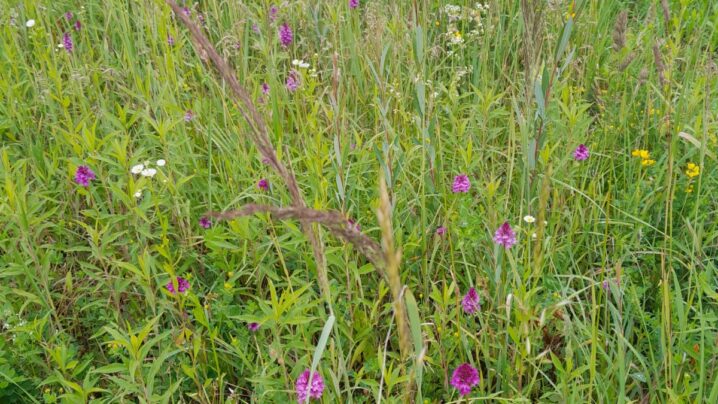
In conjunction with the remodeling of the stream, trees, shrubs, and reeds were also planted. Such a biodiverse shore area improves the ecological quality of the water and creates an aesthetic, natural landscape.
Just one part of an extensive protection concept
The renaturation of the Erla creek is the first component of a multi-stage flood protection project. Further steps include the construction of a sedimentation basin and a large retention basin with a storage capacity of 666,000 cubic meters. A suitable financing strategy for these projects is currently being developed.